about
Something is off. We are turned off. But the show will never be off.
Sometimes, one is enough. Most of the time, one is enough. A conversation with one true being is endless in its nature, no matter how, where, and when it takes form.
This space-time brings together two such beings: chairman by Cam Xanh and Andrew Newell Walther's Super-Feature Text Movie. Both reveal a body somewhere in time, assembled from the found words and objects of our era. At the end of a space/time—at the closing of an age—they initiate a silent examination. They probe the missing connections: between words, between one and another, between the self and the world.
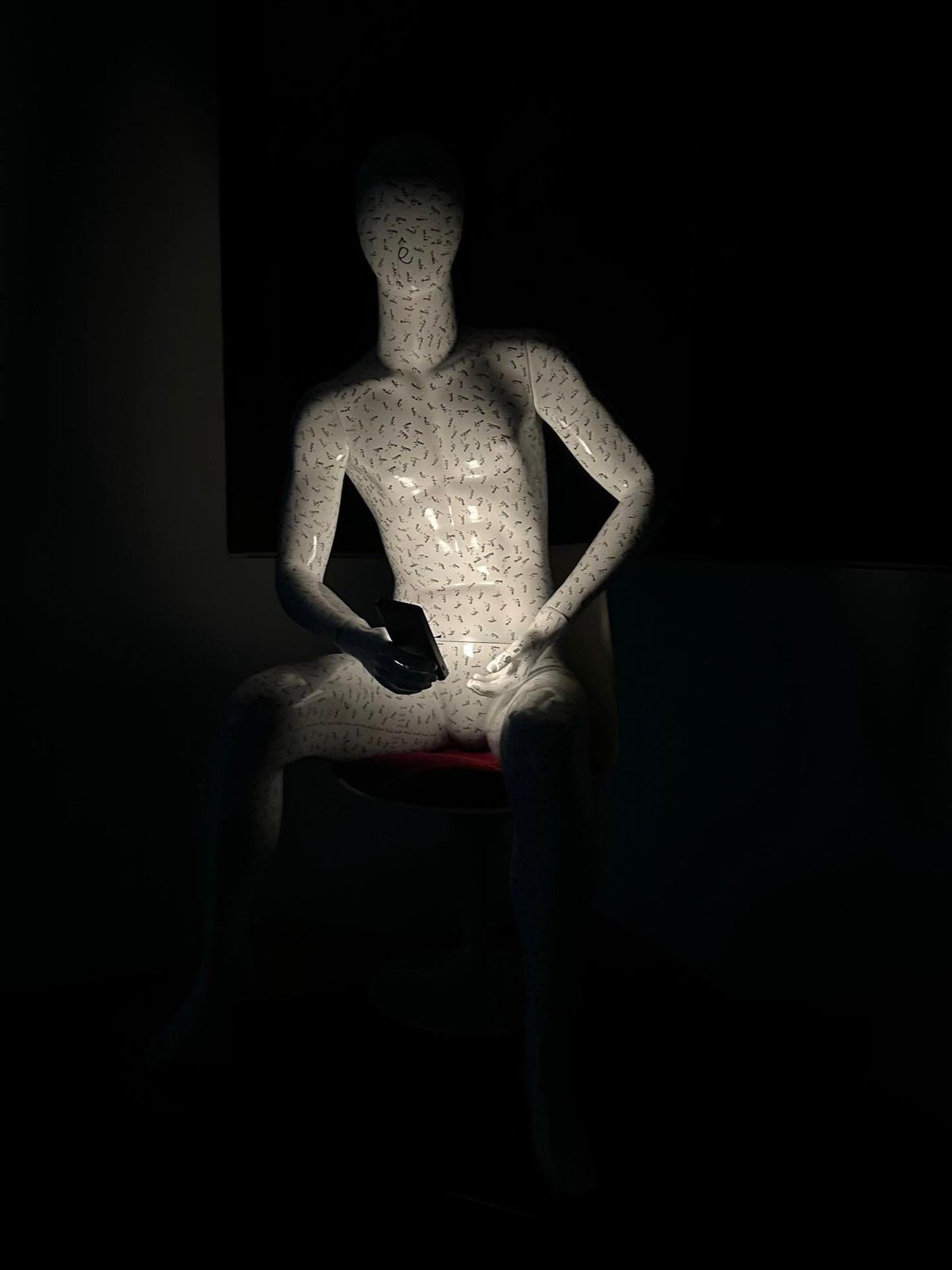
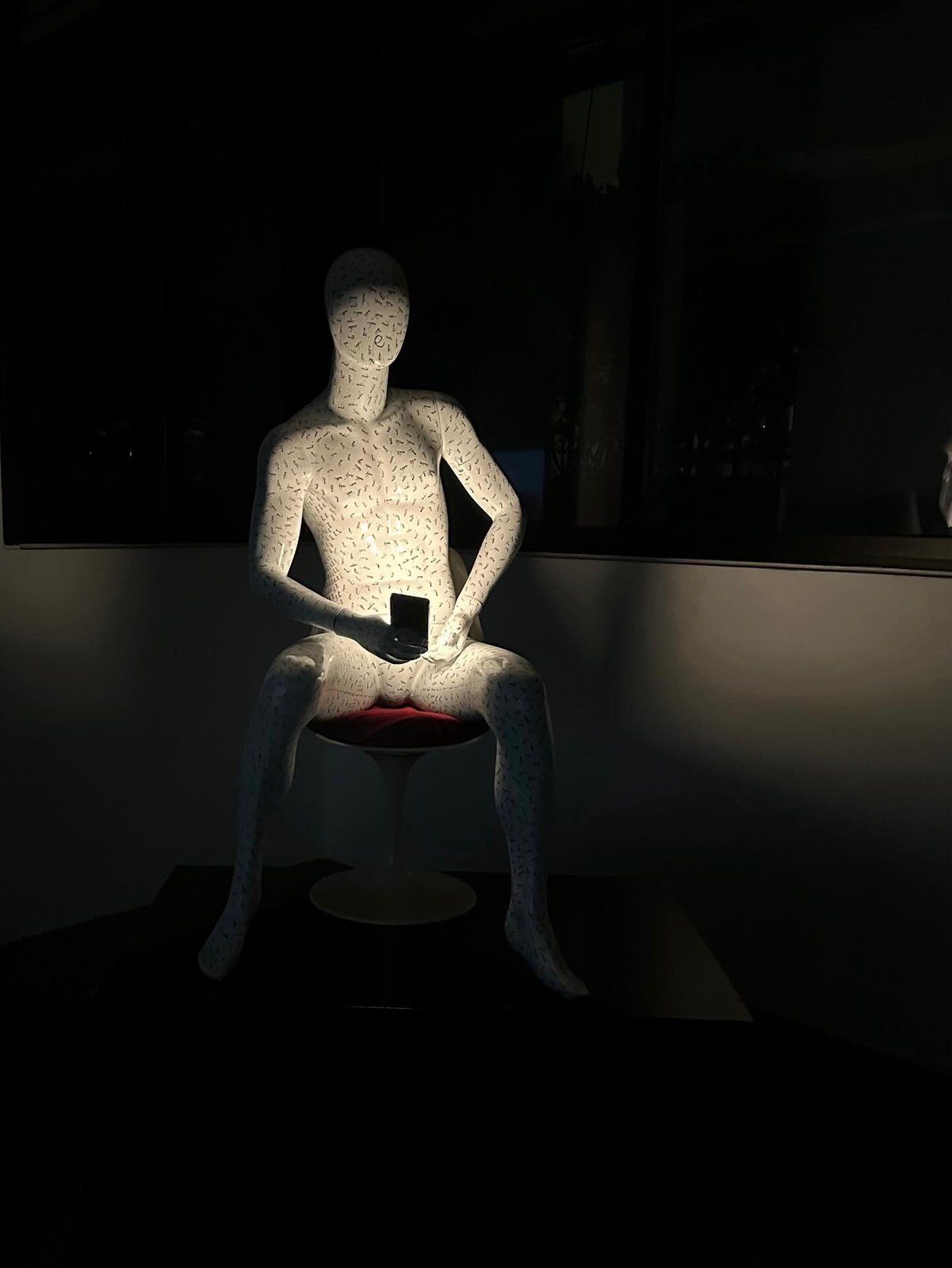
Cam Xanh's chairman is an autopsy of the modern self. A bleached mannequin—a vacant, mass-produced form—sits in the borrowed posture of The Thinker. It is labeled with words like "WATER" and "EYE" as if its soul were shipped as cargo, its only hint of viscera a red velvet cushion placed beneath it, a heart that is sat upon, not contained. Its mouth is shaped by the Vietnamese letter "ê" (eh?)—not a word, but the shape of a question. It is a "Psychomade": the self as a readymade sculpture. Its function is to govern a single, internal meeting. It has no inner life, so it conscripts yours. When you stand before it, your own silent "eh?"—your search for meaning—completes its circuit. It mirrors your own act of self-assembly back to you.
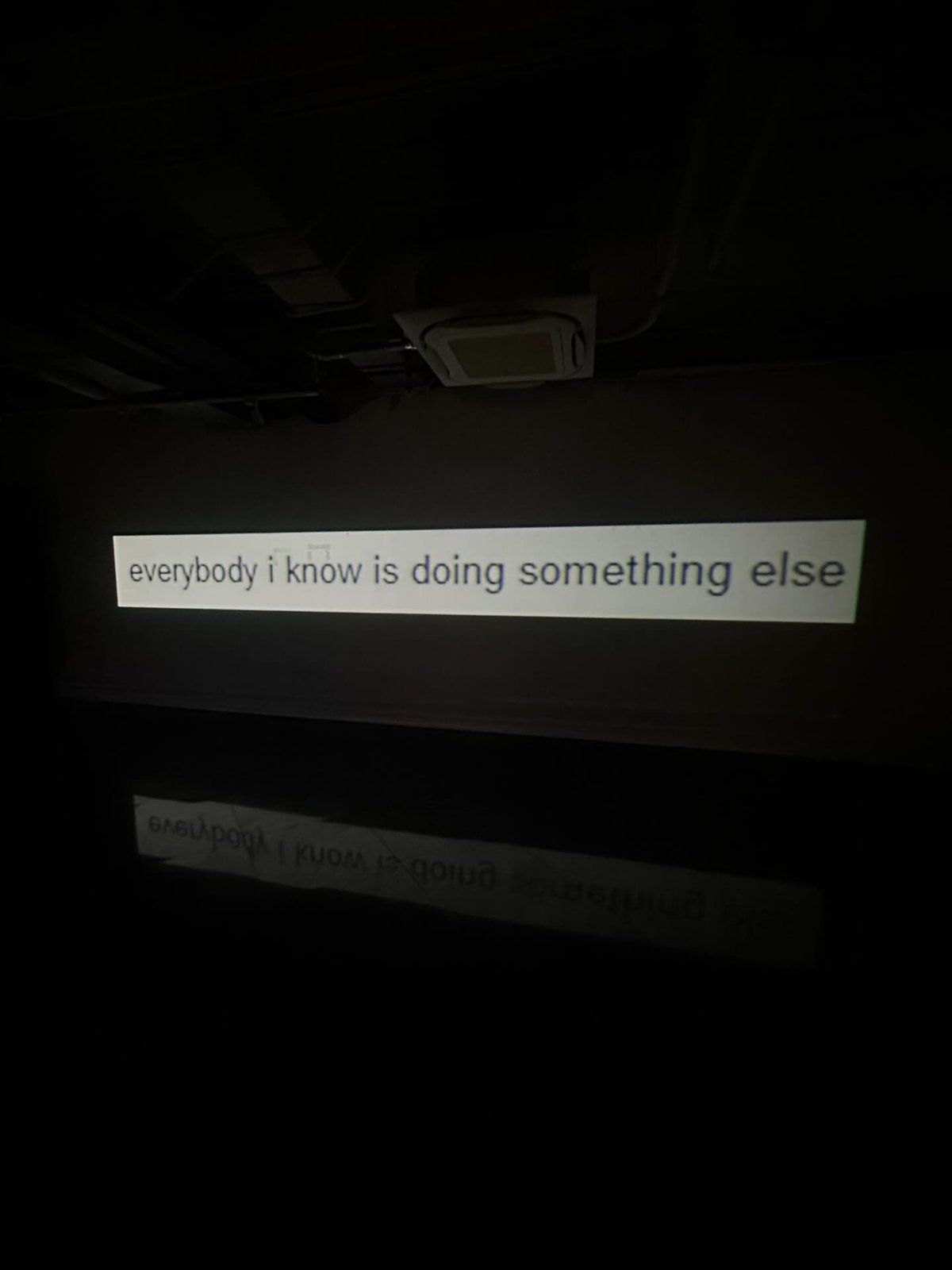
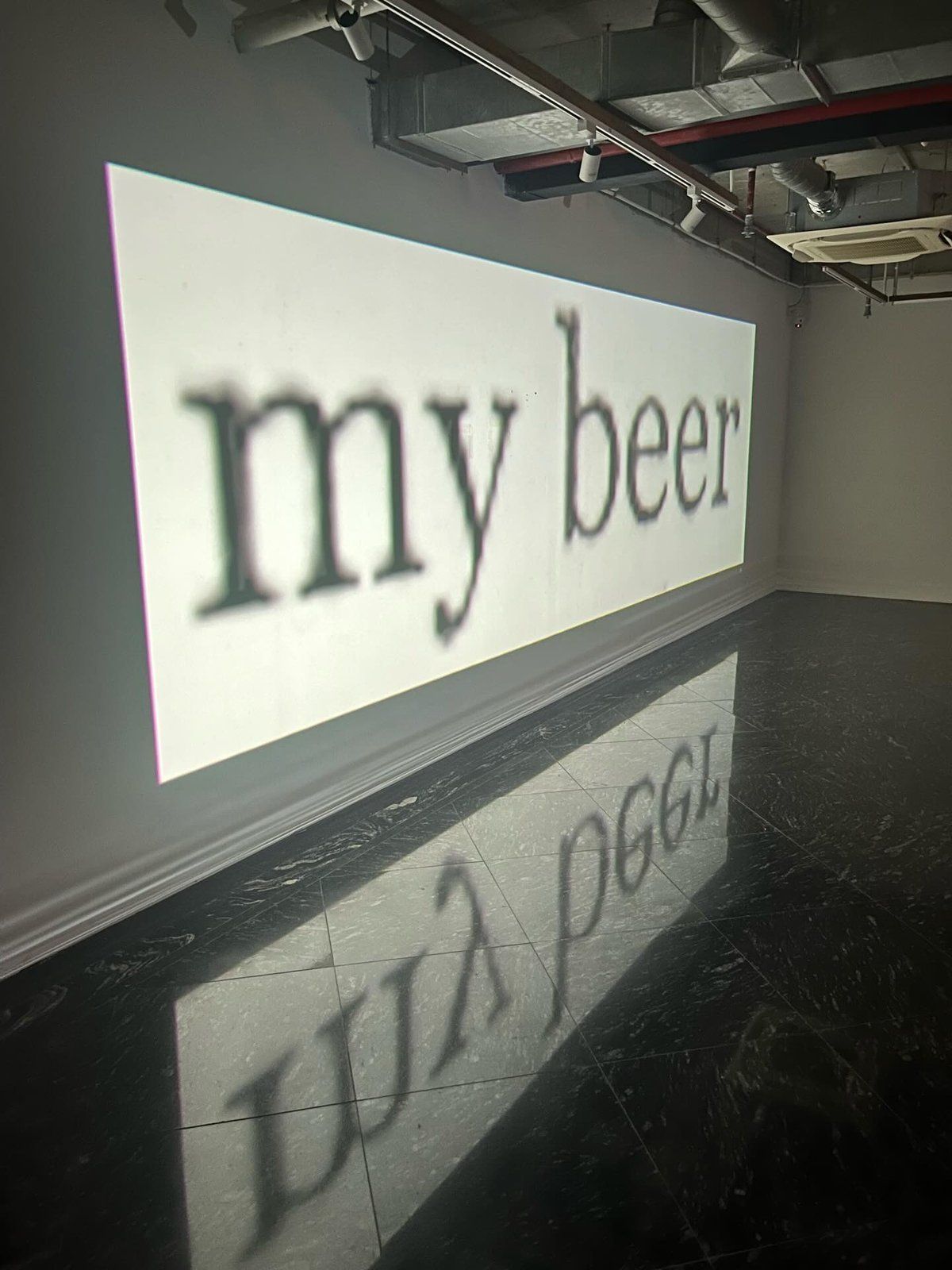
Andrew Newell Walther's Super-Feature Text Movie is a 24-hour silent digital video file, presented as a continuous slideshow. It consists of tens of thousands of individual images, each containing a single word or short phrase digitally excised from source documents—legal and administrative texts, historical records, personal materials. All identifying context has been removed; the fragments no longer function as records or evidence. Meaning does not reside in the fragments, but arises in the space between them—through adjacency, duration, and the viewer's own encounter with this disembodied dataset as it unfolds. It is a "super-feature" in which language itself, stripped bare, becomes the sole actor.
SHOW|off creates a charged interface—a surface tension—between an internal collapse and an external expansion.
Xanh's work is inward, organic, and fluid. It maps psychological space with poetic, personal code. It is the tear that threatens to crack the varnish of the curated self.
Walther's work is outward, inorganic, and analytical. It confronts the systemic architecture that catalogues and controls. It is cold, durational cinema of the "data-point self," where the poetry is algorithmic and the narrative is one of erasure.
One is a landscape felt on the skin; the other externalizes the body for systemic interpretation and projection. Together, they ask: In a world adept at reading our surfaces—thermal, digital, social—can the depth and poetry of subjective experience survive? Can the inner sob be heard over the 24-hour hum of the archival reel?
Everything started with the word. And the word is: SHOW will never be off.
This is that word made manifest. It is the held breath before the sob, the eternal moment between the sterile idea and the messy, weeping fact of being.
The meeting is now in session.
documentation